
How to handle conference interpreting? A complete guide covering everything from choosing the right method to costs, preparation, and important points to consider!
When inviting speakers or participants from overseas to corporate conferences or international meetings, it may be necessary to arrange for interpreters to overcome language barriers.
However, simply hiring an interpreter does not necessarily mean that preparations are complete.
It's important to choose the appropriate interpretation method for the event, such as simultaneous or consecutive interpretation, and to prepare as needed, including interpretation equipment, venue sound and video, and online streaming.
This article explains the differences between conference interpreting methods, how to choose the right one, factors that affect costs, the preparation process, and key points to prevent problems on the day of the event.

Interpretation methods used in conferences
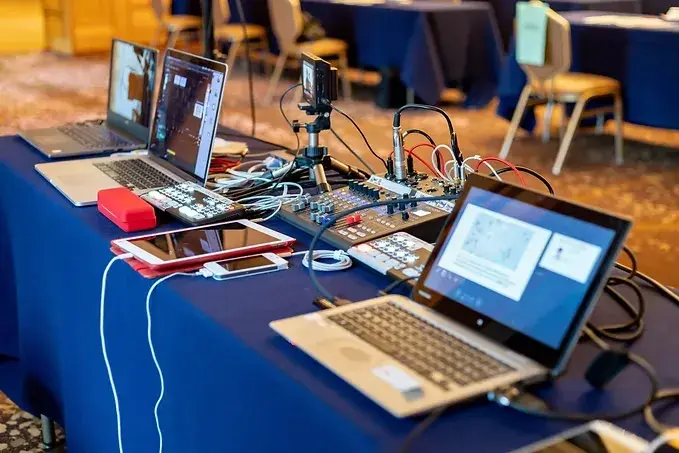
The main interpretation methods used at conferences are as follows:
Simultaneous interpretation
Consecutive interpretation
Whispering Interpreter
Online/Remote Interpretation
Below, we will take a closer look at each interpretation method.
Simultaneous interpretation
Simultaneous interpretation is a method in which an interpreter translates what a speaker is saying into another language almost simultaneously.
Because it eliminates the need to interrupt the proceedings every time someone speaks, it is well-suited for conferences where a lot of information needs to be conveyed within a limited time, such as lectures, panel discussions, and international conferences.
If the event is held in person, one method is to send the speaker's audio to the interpreter's headset, and then have the interpreter translate the audio through a microphone and deliver it to the participants.
If multiple languages are supported, participants can use receivers or earphones to listen to the interpretation audio in the language they need.
Therefore, in addition to interpreters, preparations such as interpreting booths, microphones, headsets, transceivers, and venue sound systems may be necessary.
In addition to ensuring that interpreters can clearly hear the speakers' voices, it is also important that they have an environment where they can see the speakers' facial expressions, projected materials, and the overall atmosphere of the venue.
The number of interpreters needed will vary depending on the duration of the event, the language used, and the level of expertise required, so be sure to check with the service provider in advance.
Consecutive interpretation
Consecutive interpreting is a method in which the interpreter translates what the speaker has said after they have finished speaking in a certain chunk of words and paused.
Unlike simultaneous interpretation, which often requires dedicated interpretation booths or language channels, this method is easy to use for small meetings, business negotiations, interviews, Q&A sessions, and short greetings.
On the other hand, because time is needed for both "speaking" and "interpreting," the overall proceeding time will be longer compared to not using an interpreter.
Therefore, when creating the script, it is important to schedule in advance to include the time required for interpretation.
Communicating with speakers and moderators to limit their remarks to a certain length will help ensure the event proceeds smoothly.
Additionally, when providing simultaneous interpretation in a large venue, microphones and sound equipment may be necessary to ensure the interpreter's voice reaches the participants.
Whispering Interpreter
Whispering interpreting is a method in which the interpreter speaks in a low voice, almost simultaneously, near the participant who needs the interpretation. It is sometimes called "whispering interpreting."
It is particularly useful when interpreting for a small number of people, and its key feature is that interpretation can be done without interrupting the flow of the meeting.
On the other hand, as the number of people requiring interpretation increases, it becomes difficult to deliver the same audio to everyone.
Additionally, it may be difficult to hear if the venue is noisy or if the interpreter is far from the participants.
If necessary, a simple interpretation device can be used that transmits the interpreter's voice from a transmitter to the participants' receivers.
When using whispering interpreting, be sure to check not only the number of people involved, but also the duration of the event, the size of the venue, the seating arrangement, the surrounding noise, and whether the interpreter can see the speakers and materials.
Online/Remote Interpretation
Online and remote interpreting is a method in which interpreters and participants can join from a location other than the venue via the internet.
Even online, there are two types of online interpretation: "online simultaneous interpretation," where the speaker's words are translated almost simultaneously, and "online consecutive interpretation," where the speaker and interpreter take turns speaking.
Online simultaneous interpretation is characterized by the use of interpretation functions in web conferencing systems or dedicated remote interpretation systems to deliver the speaker's original audio and the interpreted audio separately to the participants.
While online consecutive interpreting is easy to implement even in typical web conferences, there is a risk of the speaker's and interpreter's voices overlapping if the timing of pauses between speeches is not predetermined.
Furthermore, with remote interpreting, it's not enough for the interpreter to simply be able to connect to the online meeting.
It is necessary to verify that the audio and video from the speakers are correctly transmitted to the interpreters, and that the interpreters' audio is also delivered to the participants without any problems.
Before the actual event, perform connection tests using the computer, headset, microphone, internet connection, and conference system that you will be using.
In addition, deciding in advance how to guide participants to the interpretation channel and how to reconnect if the connection is lost will help prevent problems on the day of the event.
How to decide on a conference interpreting method

When deciding on a conference interpretation service, it's important to consider not only the number of attendees, but also the number of interpreters needed, the flow of the event, the languages used, and the format of the conference.
The most suitable interpretation methods for each main condition are as follows:
conditions | Suitable method | Main reason |
Large-scale lectures and international conferences | Simultaneous interpretation | Because it makes it easier to deliver the translated audio to many participants without interrupting their speech. |
Small group meetings and exchange of opinions | Consecutive interpretation | Because it makes it easier to proceed by pausing and checking the content of each statement. |
The number of people requiring interpretation is small (approximately 1-2 people). | Whispering Interpreter | Because it is easier to provide interpretation services to a limited number of participants. |
Online event | Online simultaneous interpretation / Online consecutive interpretation | Because it can accommodate speakers and participants who are in remote locations. |
Hybrid event | Simultaneous interpretation + online streaming, etc. | Because we need to deliver the interpreted audio to both the venue and online attendees. |
International events that handle multiple languages simultaneously | We will focus on simultaneous interpretation. | Because it makes it easier to deliver separate interpreted audio for each language in parallel. |
However, the table above is only a guideline. In reality, you should not decide on the format based solely on the total number of participants, but also consider the following points.
Number of people who need an interpreter
Language to use
Whether or not there was a Q&A session
Session length
Venue size and seating arrangement
Online participation availability
If you are unsure, check the number of participants, languages, format, and content of the event in advance, and choose a structure that is suitable from both an interpretation and event technology perspective.
Where can I request conference interpreting services?
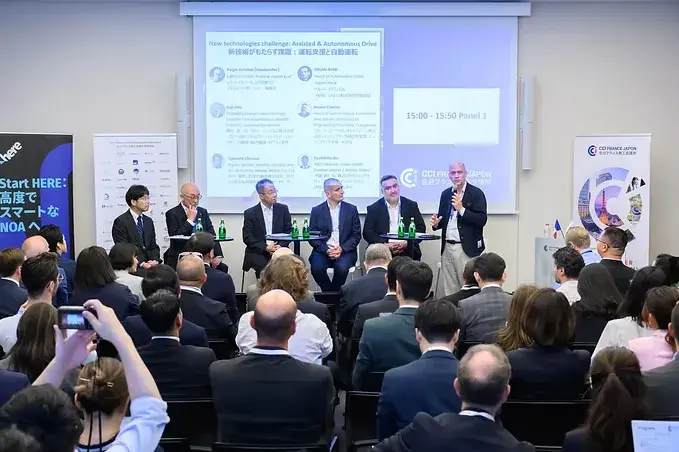
The main places where you can request conference interpreting services are as follows:
Interpretation company
Freelance interpreter
Event management and streaming support company
Below, we will take a closer look at the characteristics of each and the points you should be aware of.
Interpretation company
An interpreting agency is a service that can arrange for interpreters to be provided according to the content of the event, the language used, the desired interpretation style, the duration of the event, and other factors.
For conferences dealing with specialized topics, a key feature is the ability to consult with staff about arranging interpreters who are experts in the relevant field, as well as the ease of arranging a team of multiple interpreters needed for simultaneous interpretation.
When making a request, in addition to the languages and areas of expertise they can handle, be sure to check the following factors as well.
Can I check the interpreter's background and experience?
What kind of system would be in place if multiple people were to handle the situation?
Can you arrange for a replacement interpreter in the event of a sudden vacancy?
Can you handle everything from interpreting booths and transceivers to venue sound, video, and online streaming?
Will it be necessary to coordinate with another business operator?
Furthermore, since the scope of services varies among interpretation companies, it's important to confirm in advance what services you can expect to be provided.
Freelance interpreter
Another option is to directly hire a freelance interpreter.
Since you can communicate directly with the interpreter, you can request their services while checking their areas of expertise, languages they support, and past experience.
This method is easy to use if you already have a reliable interpreter or for small meetings.
Please review the following before making a request.
Supported language combinations and interpretation directions
Can you provide simultaneous or consecutive interpretation?
Working hours
How to share preliminary materials
Confidentiality
On the other hand, for large-scale conferences and simultaneous interpretation, in addition to multiple interpreters, preparations such as interpretation equipment, sound, video, and online streaming may be necessary.
If the interpreter does not handle the technical arrangements themselves, the organizers will need to arrange for equipment companies and technical staff separately and coordinate the respective personnel.
The larger the event, the more important it is to clearly define who is responsible for what aspects.
Event management and streaming support company
Event management and streaming support companies are places where you can consult about the necessary technical environment, including audio, video, and streaming, required for interpretation.
In particular, simultaneous interpretation requires the establishment of an audio pathway to deliver the speaker's voice to the interpreter and the interpreter's voice to the participants.
Depending on the venue, equipment such as interpreter booths, transceivers, and microphones may also be required.
Furthermore, in a hybrid event, it's necessary to decide "whose audio will be delivered to whom," including not only the speakers and participants at the venue, but also the online speakers, participants, and interpreters.
When hiring an event management and streaming support company, be sure to check the extent to which they can handle the following items.
Interpretation equipment
venue sound system
picture
Online streaming
Recording
Equipment setup and dismantling
Arrangement of technical staff on the day
Depending on the company, they may handle the arrangement of interpreters themselves, or they may coordinate with interpreters arranged by the organizers or interpreting agencies and only handle the technical aspects.
When making an inquiry, it's helpful to clearly define the scope of work by separately confirming the arrangement of an interpreter and the technical support required.
Simultaneous interpretation examples from LIFE.14

This case study showcases LIFE.14's technical support, including simultaneous English-Japanese interpretation, for the international hybrid seminar "TICAD 9 Partner Project: Unlocking Africa's Potential - Opportunities for EU-Japan Business Cooperation," hosted by the EU-Japan Centre for Industrial Cooperation.
I was responsible for setting up the audio lines, including simultaneous English-Japanese interpretation, as well as setting up and operating the equipment for hybrid streaming, switching between presentation videos and presentation materials, creating recorded data for streaming, taking photos at the venue, and producing a highlight video after the event.
In hybrid events, the audio required differs between the venue and online audience. Therefore, it's crucial to manage the original audio from the speakers and the interpreted audio separately and design the system to deliver each to the appropriate location. In this case, we confirmed the program and audio flow in advance and created an environment where interpretation, audio, video, and streaming could work together seamlessly.
When incorporating simultaneous interpretation into a conference, it's crucial to prepare not only by arranging interpreters, but also by considering the technical aspects, such as how to deliver the interpreted audio.
The process for requesting conference interpreting services.

The main steps involved in requesting conference interpreting services are as follows:
Let's clarify the conditions for holding the event.
Inquire/Request a quote
Compare and confirm the estimate and scope of service.
Enter into a contract
We will have a preliminary meeting.
Share the materials with the interpreter.
Check the audio and progress during the rehearsal.
Let's take a closer look at each step below.
Let's clarify the conditions for holding the event.
First, let's check the conditions for the event that have been decided so far.
The main conditions we'd like to confirm are as follows:
Date
venue
Number of participants
Number of people who need an interpreter
Language used
Event format
Event details
Session length
Regarding language, don't just look up information like "Japanese and English will be used," but also confirm whether it's one-way communication (Japanese to English, English to Japanese) or two-way communication.
Furthermore, the necessary interpretation system and technical configuration will vary depending on the number of speakers, participation methods, whether or not there is a Q&A session, whether or not there are online participants, and whether or not the event will be recorded and streamed.
If you have already decided on the venue's sound equipment, internet connection, and the web conferencing system you plan to use, having that information ready will make the consultation process smoother.
There's no need to force yourself to decide on items that are still undecided.
Please communicate the current situation, such as "We are expecting 100-150 participants" and "We are currently selecting a venue."
Even if you haven't decided on an interpretation method, you can discuss which method—simultaneous, consecutive, whispering, etc.—is most suitable after providing us with the event's requirements.
Inquire/Request a quote
Once you've checked the event requirements, contact interpretation agencies, interpreters, event management and streaming support companies, etc.
When making an inquiry, please provide any information you currently know, such as the date and time, location, language used, number of participants, number of people requiring interpretation, event format, event content, and preferred interpretation method.
If simultaneous interpretation is planned, please also share whether interpretation equipment such as interpreter booths and receivers, venue sound and video, and online streaming are required.
Sharing materials such as the program, venue map, and planned web conferencing system will make it easier for others to determine the necessary personnel and equipment.
For details that are not yet finalized, please state that they are still undecided and the expected date for a decision.
If the event date is already set, it's important to start discussions as early as possible to secure interpreters and necessary equipment.
Compare and confirm the estimate and scope of service.
When checking a quote, don't just look at the price, but also check what's included.
The main items to check are as follows:
Interpreter fees
Costs of preparation and rehearsals
Interpretation equipment such as interpreter booths and receivers
Audio and video equipment
Online streaming
Setup and dismantling
Costs of technical staff
Time spent by interpreters and technical staff
Number of receivers
Number of interpretation channels
Time to enter the venue
Additional charges for extending the event duration
Additional costs if the number of participants increases
Costs when additional equipment is added
Fees for rescheduling or cancellation
When comparing multiple service providers, it's easier to compare quotes if you provide them with as similar conditions as possible.
Even if the quoted price is low, if it doesn't include the necessary equipment or staff, you may need to arrange them separately later.
It's important not to just look at the total amount, but to check whether it includes everything necessary for the day's operations.
Enter into a contract
Once you've chosen a contractor, review their quote and scope of work, and then proceed with the necessary procedures such as signing a contract and creating a purchase order.
Before signing the contract, please check the following points to ensure there are no discrepancies with the estimate.
Date and time
Supported Languages
Number of interpreters
Equipment details and quantity
Setup and dismantling time
Payment Terms
It's also important to check how the schedule and number of participants will be handled, as well as the cancellation policy.
If your conference involves handling unreleased product information or internal company information, be sure to establish non-disclosure agreements (NDAs) and procedures for handling materials as needed.
If you plan to record or film the event, it's a good idea to confirm in advance how the data, including the interpreted audio, will be used and managed.
We will have a preliminary meeting.
After signing the contract, hold a preliminary meeting with the organizer, interpreter, and, if necessary, sound, video, and streaming personnel.
Especially in simultaneous interpretation and hybrid events, it is crucial to check the audio flow in advance.
For example, let's check the following points.
How to deliver the speaker's audio to the interpreter
How to deliver the interpreter's audio to the attendees at the venue.
How to deliver the interpreted audio to online participants
How do interpreters verify the images of speakers and projected materials?
Who will inform the interpreter of any changes to the schedule on the day of the event?
Who will make decisions and give instructions if there are problems with the equipment or network connections?
Instead of considering interpretation, sound, video, and streaming separately, understanding them as part of the overall event flow will make coordination on the day much easier.
Share the materials with the interpreter.
To the extent possible, share materials with the interpreter so they can review the event content and technical terms beforehand.
The main points we would like to share and confirm in advance are as follows:
Items to share and confirm in advance | Main contents |
Presentation materials | ·slide • Handouts - Items that the speakers will use on the day |
Schedule for the day | ・ MC script • Order of appearance Session time • Scheduled Q&A session etc. |
Terms/proper nouns | ・Company name ・Product name ・Person's name Technical terms ・Abbreviation Official notation How to read etc. |
Speaker Information | ・ Affiliation ·post Presentation theme Language to use etc. |
Video and audio | - Video to be played on the day ·audio ・Contents Script etc. |
Handling of materials | • Presence or absence of confidential information ・How to share Viewing scope • Method of managing documents etc. |
How to contact us when making changes | - Contact information in case of changes to the order of speakers or presentation content How to share contact information |
Even if the materials aren't complete, providing any existing resources, such as an event overview or past materials, will make it easier for the interpreter to prepare in advance.
On the other hand, when updating multiple documents, it can become difficult to determine which is the latest version.
Make the file names and modification dates clear, decide where to manage the latest version, and who will be notified when an update is released.
Check the audio and progress during the rehearsal.
Before the actual event, conduct a rehearsal with interpreters, speakers, moderators, and sound/video/streaming staff as needed.
It's important not only to check the progress, but also to test the actual equipment that will be used during the event, such as microphones, interpreting equipment, computers, web conferencing systems, and internet connections.
Simultaneous interpretation involves ensuring that the speaker's voice is clearly heard by the interpreter, that the interpreter can see the speaker and the projected materials, and that the interpreted audio reaches the participants through the correct language channel.
For online or hybrid events, ensure that the original audio and interpreted audio are heard correctly not only at the venue but also online.
Even when using remote presenters or video/audio, prior testing is necessary, following the actual flow of the presentation.
Also, be sure to check when to use the microphone, how to conduct the Q&A session, and how to switch between interpretation channels.
Furthermore, deciding on backup equipment, alternative lines, and emergency contact methods in case of equipment failure or communication problems will help prevent confusion on the day of the event.
Key points to avoid mistakes when interpreting at a conference.

The main points to check to ensure smooth conference interpreting are as follows:
Choose the interpretation method that best suits your purpose.
Check the cost of the interpreter.
Share materials with the interpreter in advance.
Check the scope of services provided by the service provider.
Let's take a closer look at each of these points below.
Choose the interpretation method that best suits your purpose.
At conferences, in addition to human interpreters, AI interpreters are also used, or a combination of both.
When deciding which method is most suitable, don't simply consider the cost; take into account the required accuracy, expertise, supported languages, and real-time capabilities.
The main characteristics of each interpretation method are as follows:
Interpretation methods | Suitable situations | Points to note |
AI Interpreter | If you want to support multiple languages - If you want to convey the main points of the content in real time using subtitles and audio. | It is necessary to check in advance whether you can correctly handle technical terms, proper nouns, context, and subtle nuances. |
Human interpretation | • Highly specialized lectures - When it is necessary to carefully convey the intent and nuances of what is being said. | Confirm that the interpreters are qualified to handle the event's specific field, and prepare the necessary number of interpreters and equipment for simultaneous interpretation. |
AI interpretation + human interpretation | When the required accuracy, supported languages, and budget differ for each session. | Decide in advance which sessions will be handled by "AI" and which by "humans". |
When using AI translation, it's important to test it in an environment that closely resembles the actual situation.
This is because the accuracy of speech recognition and the time it takes to receive translation results can vary depending on the speaker's speaking style and accent, technical terms, and background noise in the venue.
Furthermore, if you plan to send meeting audio or text information to an external service, be sure to check the data storage methods and usage conditions in advance.
Regarding human interpretation, there is no need to standardize the entire event into a single method.
For example, one approach is to use simultaneous interpretation for important lectures and consecutive interpretation for small group discussions, adapting the method to each session.
Check the cost of the interpreter.
The cost of conference interpreting is not determined solely by the interpreter's fee.
The necessary costs will vary mainly depending on the following conditions:
Conditions that affect costs | Main reasons why costs change |
Interpretation method | The number of people required and the method of operation differ depending on whether it is simultaneous or consecutive interpretation. |
Language used | The interpreter to be arranged will vary depending on the language or language combination being handled. |
Specialization of content | Because interpreters with specialized knowledge in fields such as medicine, finance, and IT may be needed. |
• Event time Number of interpreters required | The required number of participants varies depending on the length of the event, the number of languages spoken, and the difficulty level of the content. |
• Venue • Event format | For events held in distant locations, transportation and accommodation may be necessary, and for online events, streaming environments may be required. |
• Abundance of interpretation equipment • The large amount of technical support required | Interpretation booths, receivers, sound systems, broadcasting equipment, and technical staff may be required. |
To get an accurate cost estimate, please provide details such as the date, language used, preferred interpretation method, duration, number of participants, event format, and venue facilities when requesting a quote.
Share materials with the interpreter in advance.
Conferences often feature a lot of technical jargon, proper nouns, company names, and product names.
If the interpreter goes into the actual event without understanding the content, they will have to check terminology and background information on the spot, so provide as many shared materials as possible in advance.
Providing interpreters with shared information such as the event overview, scheduled speakers, and past presentation materials, in order of convenience, will make it easier for them to prepare.
Additionally, include the pronunciation of words that are difficult to read, such as product names and personal names, and list the full name and meaning of abbreviations.
Sharing a large amount of material at the last minute may not give interpreters enough time to review it thoroughly.
Confirm with the person you're requesting the information from as soon as possible which documents need to be shared and by when.
Check the scope of services provided by the service provider.
In conference interpreting, separate companies may handle the arrangement of interpreters and the technical support, such as interpreting equipment, audio, video, and online streaming.
Therefore, it is important to clearly define who will handle what and to what extent before making a request.
The main items to check are as follows:
Check items | Confirmation details |
Arranging an interpreter | Can you arrange an interpreter who is suitable for the event's content, field of expertise, and required languages? |
Interpretation method | Can we discuss the most suitable interpretation method, such as simultaneous or consecutive interpretation, based on the number of participants, the flow of the event, the language used, and the format of the event? |
Interpretation equipment and sound systems | To what extent will you handle the arrangement, setup, and operation of interpreter booths, receivers, microphones, sound equipment, etc.? |
Online and hybrid compatible | Can you handle not only the venue but also the distribution and audio settings for delivering interpreted audio to online participants? |
Pre-check/rehearsal | Before the actual performance, check the audio, equipment, and connection environment, and if necessary, be prepared to conduct a rehearsal. |
Technical support on the day | To what extent will on-site support be provided in the event of problems with sound or streaming? |
At LIFE.14, we provide technical support for simultaneous interpretation at international conferences and corporate events, including audio, video, and online streaming.
We offer customized technical solutions for complex audio and streaming environments, including hybrid events that deliver interpreted audio to both in-person and online attendees.
If you would like to discuss technical aspects such as interpretation equipment, audio, video, and streaming, in addition to arranging an interpreter, please contact us.
Conference interpreting involves more than just arranging for interpreters.

When providing interpreting services at a conference, simply arranging for an interpreter is not enough preparation.
Especially in simultaneous interpretation, in addition to equipment such as interpreter booths, receivers, and headsets as needed, it is necessary to set up microphones to transmit the speaker's voice to the interpreter, venue sound systems, and a system to transmit the interpreted audio to the participants.
The basic audio flow is divided into two parts: "the route for delivering the speaker's original audio to the interpreter" and "the route for delivering the interpreter's audio to the participants."
When supporting multiple languages, it is necessary to separate the interpretation audio for each language, and if there is a Q&A session, the interpreter must also be able to hear what the participants are saying.
Online and hybrid events make the flow of audio even more complex.
Insufficient preparation can lead to problems such as interpreters having difficulty hearing the speakers, participants not receiving the translated audio, and video and audio not being properly synchronized.
Therefore, when requesting conference interpreting services, it is important to check not only the arrangement of interpreters, but also the interpreting equipment, venue sound and video, and online streaming services.
If different companies are responsible for each aspect, clearly define who will coordinate the overall project and establish a system for collaboration through preliminary meetings and rehearsals.
For conference interpreting, it's best to entrust everything, including any necessary technical support, to the professional service provider!

To ensure smooth conference interpreting, it's crucial not only to choose an interpreting method that suits the event's purpose and flow, but also to create an environment where interpreters can monitor the speakers' audio and video, and where the interpreted audio can be accurately delivered to participants.
Especially for simultaneous interpretation and online/hybrid events, interpretation equipment, venue sound, video, and online streaming all need to work together in coordination.
In addition to preparing each component individually, you should also understand whose voice will be sent where, and who is responsible for which area.
At LIFE.14, we provide comprehensive technical support for simultaneous interpretation at international conferences and corporate events, including sound design, video, online streaming, and photography.
We can propose a technical configuration tailored to the content of your event, whether it's an in-person event or a hybrid event connecting in-person and online venues, where the flow of original audio and interpreted audio becomes complex.
If you need to arrange for an interpreter and also need to set up an environment that includes equipment, sound, video, and streaming, please contact LIFE.14.
# conference interpreting guide


Comments